
Campaigns in the Mists
Ravenloft Adventures
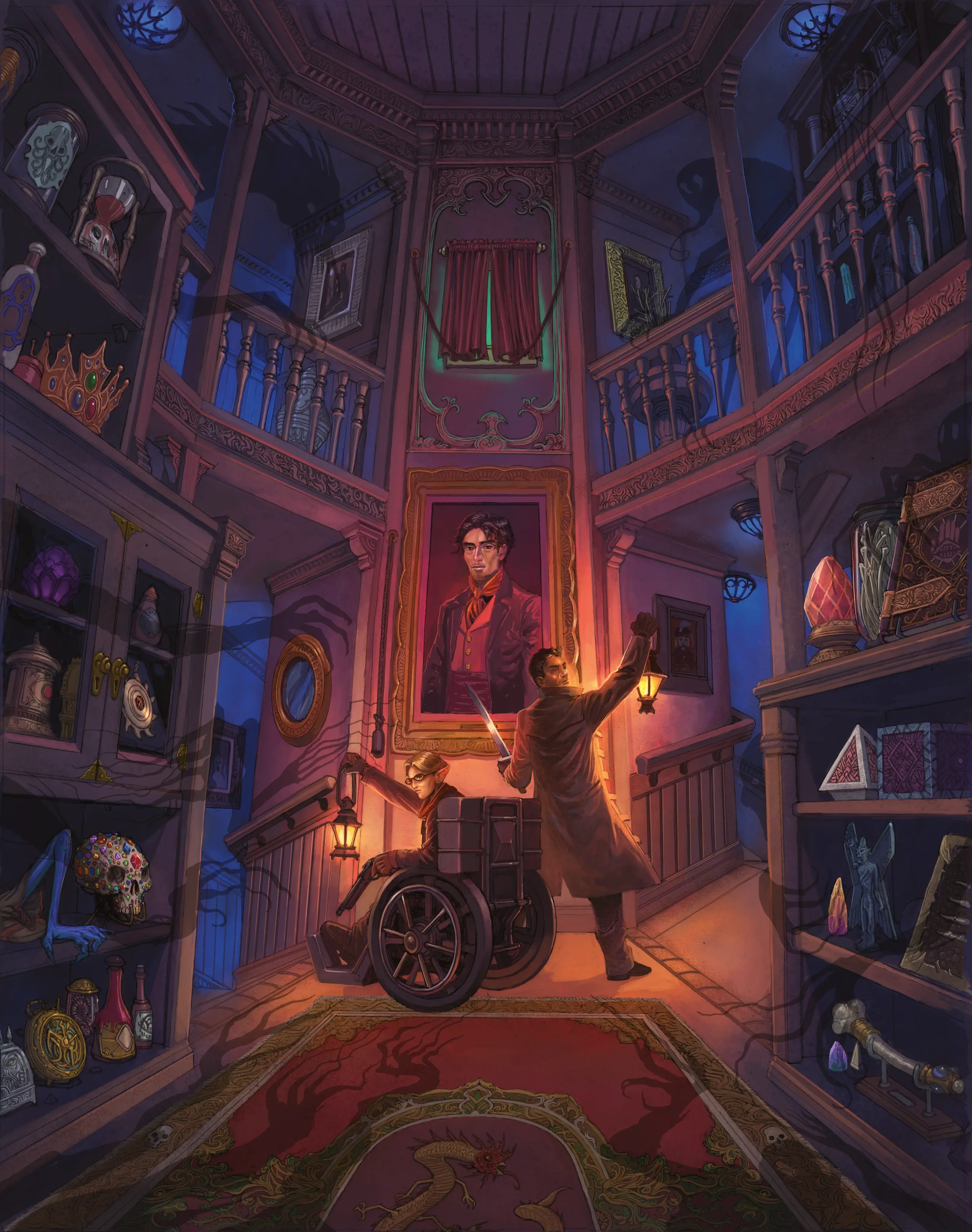
Drafting frightful encounters, adventures, and campaigns requires deliberate choices that cultivate an atmosphere of dread. This chapter explores how you, the DM, can use the Domains of Dread to create suspense during play and craft terrifying adventures.
Campaigns in the Mist
The surreal natures of the Domains of Dread, their Darklords, the Mists, and the Dark Powers serve as tools in your frightful adventures. None of them are too important to use, too mysterious to reveal, or too fragile to pit against characters. This section explores how to use the most infamous features of the Domains of Dread to create frightful campaigns.
Before preparing horror adventures, review the њEnsuring Fun for Allќ section of the Dungeon Master™s Guide.
Creating a Horror Campaign
When planning campaigns in Ravenloft, consider the guidance in chapter 5 of the Dungeon Master™s Guide, along with the following topics. Record the answers to the questions in this section to inspire your campaign.
Campaign Characters
Characters exploring the Mists are the protagonists of horror stories. Chapter 1 provides advice for players creating such characters, but you should also consider the following questions:
Character Origins. Do the characters originate from the Domains of Dread, or were they abducted from somewhere else?
Context for Surreality. Do the characters realize something is strange about the Domains of Dread, or is the Land of the Mists all they™ve ever known?
Scale of Experience. Do the characters know about a single domain”perhaps one they all call home”or do they have firsthand experience with multiple domains or other settings?
Characters™ Significance. Why are the characters special? Why did the Dark Powers, a Darklord, or something else take note of them?
Consistency of Experience. Do the answers to these questions apply to all of the characters?
Campaign Themes
Explore the types of horror adventures you™re interested in by considering the following questions:
Horror Inspirations. What horror stories or media inspire your campaign?
Horror Icons. Is there a classic monster or villain that inspires the foes in your campaign?
Horror Genres. What genres of horror”detailed in chapter 4 or elsewhere”does your campaign focus on?
Domains of Dread. Which Domains of Dread or Darklords do you want to focus on? Or do you want to create a new Domain of Dread and Darklord following the methods in chapter 4?
Setting Mysteries
The Domains of Dread function in unique ways, but if and how that matters is up to you. њRavenloft Setting Modelsќ later in this chapter details ways to shape the setting to suit your adventures. Review that section and the following questions as you consider how the nature of the Domains of Dread might shape your adventures:
Escape. Do you want characters to pursue escape from the Domains of Dread? Do they want to leave even if a domain has been their home?
Islands or Regions. Does your campaign focus on a single domain, or are there multiple domains you want to explore?
Metaphysical Scale. Do you want your campaign to explore the unusual nature of the Domains of Dread, or is that nature broadly accepted reality?
Stories and Secrets. Are tales of other domains or settings treated as facts, lore known only to a few, legends, or nonsense? Is that true for all places beyond a domain™s borders?
Traveling the Mists. Do people travel between domains? Is travel limited to wanderers such as Vistani, or are tools such as Mist talismans (see the introduction) common enough to allow for broader travel and trade?
Witnesses to the Surreal. How do domain residents react to supernatural events? Are they shocked, do they treat them as commonplace, or do they rationalize (or deny) abject horrors?
The answers to these questions are the ones that inspire you and your players.
Darklord Conflicts
Each Domain of Dread is a reflection of and a prison for a Darklord. The tales and torments of those Darklords are fundamental to adventures within their borders. Consider the following questions when developing your campaign:
Darklord Plots. Will your campaign involve the history, torment, and potential defeat of a Darklord? Or would you rather keep a Darklord in the background and focus on other stories?
Darklord Downfalls. Can a Darklord be defeated, or are they an enduring and recurring threat? What happens when a Darklord dies?
Darklord Defiance. What does it mean to best a Darklord? Does it mean slaying them, forcing them to open their domain™s borders, undermining their plans, or something else?
Darklord Relationships. Does the Darklord want to destroy, conscript, or use the characters? Does the Darklord appear in person or communicate via proxies?
Darklord Rivalries. Does your campaign feature interaction between multiple Darklords? If so, how do they know about each other? What do they have to gain from their conflicts?
The њUsing Darklordsќ section later in this chapter further explores ways to implement Darklords in your campaign.
Starting Your Campaign
Start your campaign in a way that establishes an ominous tone or highlights the nature of the Domains of Dread. Consider the following questions:
Collective Misfortune. Do the characters gather to mourn the death of a loved one? Does fate bring them together as the survivors of a disaster, such as a shipwreck or massacre?
Darklord™s Summons. When a Darklord calls, the beckoned answer. Do the characters meet after being hired by a Darklord to perform some task or by attending a social event that turns ominous?
Present Terror. Do the characters meet amid terrifying circumstances, such as being prisoners or experiment subjects?
Shared Mystery. Do the characters gather due to a shared mystery? Are they led to the same place by an enigmatic message, or do they start cooperating as they flee being accused of murder?
Strangers in the Mists. Are the characters united by the Mists? Might they be traveling to other destinations when the Mists unite them?
During character creation, you can work with players to come up with reasons why the characters might be in a grim or unusual situation.
A horrific origin might also unite the party. Players might be interested in their characters sharing a species or a Dark Gift from chapter 1. A group composed entirely of Reborn or of characters who have the Aberrant Anatomy feat can provide ample inspiration for frightful adventures.
Campaign Considerations
Think about how you might reinforce a frightful mood over the course of your campaign. Consider the following questions about topics likely to occur during a series of adventures:
Allies and Sanctuaries. Is it ever appropriate to harm characters™ allies or destroy places they consider safe? Is doing so worth making players feel like they™ve lost something they™ve invested in? See њTragic Limitsќ in the Dungeon Master™s Guide for advice on handling these topics.
Altered States. How might characters change during a campaign? Do you want to encourage players to develop character changes resulting from their experiences”such as scars, phobias, or Dark Gifts?
Character Secrets. What sorts of secrets might a character have, and are those boons to the game or potential disruptions? You can use the advice in the Dungeon Master™s Guide on evil characters to incorporate characters with secrets into your game.
Death. What happens when a character dies? How might a character brought back from death be changed?
Fear. How do you expect characters to respond to frightful situations? Is fear reflected only by the Frightened condition, or would you like players to roleplay shock and revulsion?
Hope. How will you give characters hope and ensure they don™t feel like the campaign is pointless? What rays of light perforate the darkness?
New Characters. If a character dies and isn™t raised, how will you add a player™s new character to the game? Do the Mists reveal a new hero, or might someone in a domain be inspired to act by another™s sacrifice?
When thinking about the answers to these questions, avoid changing the rules of the game”these should remain the stable, agreed-on underpinnings of the game.
Ending Your Campaign

Horror stories often don™t end well, but yours might be an exception. Have an idea of what makes a satisfying end for your horror campaign. Frame your thoughts on this by considering these questions:
Escape. Is the goal of your campaign for the characters to escape a domain or all of the Domains of Dread? Can they achieve this through the defeat of a Darklord, the will of the Dark Powers, or some other magical method?
Memorial. If a character dies, can they still contribute to a campaign™s culmination? Can an accidental death become a meaningful sacrifice? Is there important work only a spirit can do?
Survival. Do you expect any or all of the characters to survive the campaign? Will the players be satisfied if their characters™ stories end in defeat, transformation, or willing sacrifice?
Worthy Cause. What™s the goal the characters might risk everything to achieve? Is this protecting a person or place, or is it keeping something out of a Darklord™s hands? Is there a status quo that™s vital to restore or a wrong that needs to be undone?
Ensure you and the players agree on what makes a fulfilling end to a campaign. Don™t work toward a climax demanding a dramatic sacrifice that no one™s interested in making.
Further Development
Review your answers to the questions from this section to see what patterns emerge and what answers surprised or excited you. Let those answers develop into ideas for unique horror adventures and arcs for your own campaigns. Next, review the following sections in this chapter. These explore ways to employ elements of the Domains of Dread in your horror adventures and outline whole frightful campaign arcs.
Using Domains of Dread
Domains of Dread are backdrops to horror tales and the torments of their Darklord. These domains exist to confound and terrify those within. Everything in a Domain of Dread serves frightful ends, and if something seems like it doesn™t, you just haven™t revealed how yet. While creating horror adventures, consider the following facts about domains.
Ravenloft Setting Models
What domains compose the Ravenloft setting is up to you. The Domains of Dread have no definitive map or proscribed orientation for how they relate to one another. This allows you to shape the setting however best serves your adventures. Consider the following setting models for how you might use the Domains of Dread or use your favorite elements from multiple domains.
Haunted House Domain
In this model, a single domain functions like a haunted house. Characters enter, terrifying forces trap them, and the party struggles to escape. This model features in the adventures I6: Ravenloft (1983) and its descendant Curse of Strahd (2016). This setting model excels if you want to ¦
Explore the tale of a single domain or Darklord.
Highlight a narrow band of horror genres.
Avoid interacting with multiple domains or traveling the Mists.
Make a Darklord your adventures™ focal villain.
Islands of Terror
In this model, the Domains of Dread are isolated realms that characters might reach by braving the Mists. Domains™ inhabitants might be aware of each other, but travel is uncommon and dangerous. Characters might be inhabitants of a domain or wayward souls from other realms, and events might lead them through the Mists to other nightmarish lands. This model is broadly used in this book. This setting model excels if you want to ¦
Highlight the mystery and surreal nature of the Domains of Dread.
Feature tours of multiple domains while controlling where the Mists lead.
Explore stories focused on the nature of the Mists and escaping the Domains of Dread.
Make Darklords part of a cast of villains.
Clusters and Cores
In this model, the Domains of Dread are similar to countries on globe. The Mists mark the edges of the world, rise when Darklords close their domains™ borders, and appear as they please, but otherwise domains are separated by geographical and political borders. Domain inhabitants know about one another, travel, and trade, while Darklords are powerful figures that might have political or warlike aspirations. Whether you create a cluster out of a small group of your favorite domains or meld many (or all) the domains into a continent-sized core is up to you. This is the model largely used in earlier explorations of the setting, including Ravenloft: Realm of Terror (1990) and Domains of Dread (1997). This setting model excels if you want to ¦
Encourage characters to roam between domains.
Highlight villains who are infamous in multiple domains or who must be pursued (or evaded).
Explore large-scale plots, such as wars between or the destruction of the Domains of Dread.
Obscure Darklords, making them figures that might not be widely known.
Gothic Earth
The similarities between Strahd von Zarovich and Dracula, between Viktra Mordenheim and Victor Frankenstein, and between other Ravenloft villains and icons of horror fiction and film are intentional. Because many of Ravenloft™s villains and domains have real-world roots, elements from Ravenloft are readily portable into frightful adventures set on a version of Earth steeped in magic and gothic horror. While the details of such historic horror are beyond the scope of this book, consider using the tools herein to pit characters against menaces from your favorite horror tales. This model is explored in Ravenloft: Masque of the Red Death and Other Tales (1994).
Domain Details
To reinforce the types of horror your adventures explore and give domains their own malicious personalities, consider these setting elements.
Darklord Reflections
Every domain can be viewed through the lens of its Darklord, with every part of the domain reflecting some facet of the Darklord™s personality, ambition, or torment. You might think about adventures in a domain as explorations of a Darklord™s identity.
For example, Barovia™s gothic horror themes include deception, oppression, and predation, all of which are aspects of the domain™s Darklord, Strahd von Zarovich. While the village of Vallaki leans toward themes of deception, the village of Barovia, in the shadow of Castle Ravenloft, is steeped in oppression. The domain™s deadly wildernesses and beasts reinforce themes of predation. When a domain™s terrifying forces reflect aspects of its Darklord, that villain becomes a terrifying culmination of the evil in the land and the personification of the domain™s terrors.
Familiar Ground
Every Domain of Dread takes inspiration from stories within its related genres. Embrace this. Including tropes from your favorite horror stories reinforces expectations about the domain and provides a shorthand to help players understand a location. The Domains of Dread are intentionally filled with gothic castles, haunted manors, and beleaguered villages to hint at the types of characters and adventures you™ll find within. Don™t worry about recreating familiar stories, as the unpredictable actions of the players™ characters will create a unique adventure.
Twisted Tropes. Wildly deviating from tropes can create unique locations, but doing so requires more explanation to help players understand the setting. Consider instead featuring familiar horror settings with a twist to make them more appropriate to D&D or to enhance their terror. For example, characters escaping an alien laboratory in Bluetspur might be stalked by an elusive displacer beast, or the ghosts haunting a house in Mordent might be desperately trying to keep something worse sealed in the basement. Minor twists help setting elements feel distinct and work better in your game.
Isolation
Isolation can take multiple forms in a domain.
Character Isolation. In the Domains of Dread, the characters are often the land™s only opposition to a domain™s evil and their own only hope for survival. While characters might find allies or sanctuaries in a domain, the characters must look to themselves for solutions. Escape is rarely an option.
Physical Isolation. Each domain is a complete setting that the Mists might isolate from all other lands. Locations within a domain are often isolated by dark, monster-haunted wildernesses. Even settlements and sanctuaries might have their own grim secrets.
The Locals
The inhabitants of domains endure or ignore the horrors around them. Whether these individuals are oppressed people or soulless pawns of the Dark Powers is up to you, but regardless, they don™t effectively resist the horror within their homes. Characters should feel like they™re among the only ones who recognize a domain™s evil.
Incongruous Behavior. Consider treating a domain™s inhabitants as part of the strangeness of the setting. Such NPCs might willfully ignore proof of the domain™s horrors or passively behave in ways that reinforce a Darklord™s will. In more surreal cases, NPCs might forget the characters or even reappear after dying.
Nightmare Nature
To any question regarding the natural world within a domain, the scariest answer is likely true. Use details of a domain to create a beat of small, unsettling moments to support the percussion of unignorable terrors in your adventures. If you highlight the strange nature of a domain often, the land feels surreal and haunted. If you do so more rarely, the domain feels more realistic. You might even change the pace of how often you reinforce the strange nature of a domain, perhaps doing so more the farther characters are from civilization or safety.
For examples of frightful details you might highlight in a domain, roll on or choose a result from the Dread Details table.
You can customize these suggestions to reinforce the themes of a domain or its Darklord. For example, in Falkovnia, a statue might momentarily resemble a rotting zombie, while in Har™Akir, Darklord Ankhtepot™s visage might appear in a sandstorm. Strive to make such elements feel like moments of strangeness”harmless oddities that a character can dismiss as their eyes deceiving them, rather than suggestions of an immediate threat.
Using Darklords
Second only to the characters, Darklords are the most important inhabitants of the Domains of Dread. This section provides details and options for using Darklords in horror campaigns.
Darklords in Your Adventures
Most Darklords are important, recurring villains. Take time to understand these characters™ origins and develop details that you can consistently express as characters repeatedly encounter them, their agents, and evidence of their deeds. The Dungeon Master™s Guide provides details on developing villains as well as an NPC Tracker sheet. Use the guidance there and in the following sections to develop Darklords into infamous villains your players will be excited to learn about and oppose.
Roleplaying a Darklord
Most Darklords are irredeemably evil villains, obsessed with their own drives and desires. Many delude themselves into believing they™re heroes or beings beyond morality. When preparing to roleplay a Darklord, review the Darklord™s origin story and consider what traits are core to the Darklord. Aim to roleplay the Darklord in a way that makes sense with the villain™s origins and that makes you excited to play them as a recurring character.
Then consider the following questions:
What do you like most about the Darklord and want to highlight?
What are the Darklord™s three most positive traits?
What are the Darklord™s three most negative traits?
Why do others fear the Darklord?
What makes the Darklord effective in their role?
Does the Darklord think they™re a hero or better than others? Why?
Does the Darklord always lie or never lie?
How is the Darklord a reflection of one or more of the adventurers?
What does the Darklord want more than anything?
When would the Darklord be gracious or heroic?
Record your answers to these questions, then create a short list of characteristics you want to convey to the players over encounters with the Darklord.
Darklord Goals
In the adventure Curse of Strahd, the Darklord™s goals are stated as follows:
Transform and possess a victim
Torment and slay a rival
Test or toy with the characters
These goals guide Strahd™s interactions with the characters through an entire campaign, allowing for the villain™s consistent representation.
Recurring Darklords (or other prominent villains) should have similar, simple-to-understand goals. While you might know the finer details of a Darklord™s motivations, players engage with villains only a limited number of times”likely with significant amounts of time between interactions. Choose one to three objectives for a Darklord that you can reinforce during character interactions or that you can hint at with other evidence. This helps the players understand what the Darklord wants and how to act against them.
Use the goals presented above and on the list below to inspire your Darklord™s objectives:
Change society
Claim a new role
Continue a tradition
Correct a tragic event
Defend the status quo
Enforce order
Escape their prison
Find a missing person
Maintain a lie
Prevent the inevitable
Recover a lost treasure
Relieve their boredom
Seek a revelation
Suppress a secret
Darklord™s Tale
A Darklord™s villainy informs their goals and the torments they suffer. As characters adventure in a Darklord™s domain, they learn about the Darklord, hear reports of the Darklord™s infamy, and eventually discover secrets to frustrate or undermine the villain. Consider these ways of revealing details about a Darklord:
Rumors and Legends. Domain inhabitants typically know of a Darklord or the results of the villain™s evil. They can provide consistent reports of the Darklord™s depredations, what little they know of the villain™s origins, and examples of how their lives are affected by the Darklord™s evil.
Evidence. Show the characters examples of the Darklord™s evil, the suffering of the villain™s victims, the crimes of the Darklord™s servants, and how the domain is scarred by the Darklord™s wickedness.
Lies. The Darklord or their servants provide flattering but false details of the villain™s origins, personality, or objectives. Within such lies are truths commoners don™t know.
Primary Sources. The truth of a Darklord™s past might come from the villain™s family, longtime servants or rivals, or historic records”such as journals, correspondence, or neglected artwork. Magical sources, such as mirrors that reflect the past or methods to enter the Darklord™s memories, might also reveal secrets. Such truths might be hidden, but the Dark Powers ensure they survive to torment the Darklord.
Darklord™s Menace
Not every Darklord is a threat in combat to every party, but a Darklord™s menace isn™t rooted in their stat block. Rather, it™s built over adventures where evidence of the Darklord™s wickedness is established and reinforced. Consider the following questions to develop a Darklord™s reputation, adding them as features of adventures:
Demonstrations. When the characters offend the Darklord, how does the villain express displeasure? Do they take it out on the domain™s inhabitants? Do they dub the characters criminals or heretics and execute innocent people who helped the characters?
Law and Superstition. What do the domain™s inhabitants do or refuse to do out of fear of the Darklord or the situation the Darklord has created? Have these habits become local traditions?
Servants. What serves the Darklord? Are they soldiers and servants? Are they monsters or strangely behaving animals? Is it the weather or environment itself? How do such servants make it clear they™re extensions of the Darklord™s will?
Signature Evidence. How does the Darklord prey or experiment on the domain™s inhabitants and what evidence does that leave? If the Darklord executes or sacrifices foes, what is their signature form of slaughter?
Strangers. Do domain inhabitants believe strangers are agents of the Darklord or likely to attract the Darklord™s attention? Do they avoid strangers or spy on them for the Darklord?
Titles. What is the Darklord™s title? Is it a royal or religious title, or is it an epithet the domain™s inhabitants call them?
Meeting a Darklord
Your players™ first encounter with a Darklord should be memorable. Prior to this encounter, the characters might have heard rumors of the Darklord and witnessed their depravity. Reinforce this by planning how the characters will meet the Darklord and what the villain will be doing. Consider whether the Darklord is ¦
Attempting to hire the characters.
Commanding the Darklord™s servants.
Committing a signature crime.
Engaged in an experiment.
Having a decadent or horrible meal.
Impatient with the characters™ interruption.
Pretending to be heroic.
Trying to lure a victim.
Pay attention to the Darklord™s first words to the characters. Chapter 2 presents greetings along with many Darklords™ portraits. Take inspiration from these greetings, and have the Darklord™s first words reflect their self-obsessed personalities and how they perceive strangers.
In future meetings, the Darklord should behave consistently. You might develop a signature way of speaking, turns of phrase, or an in-character voice for a Darklord, but keep these simple so the villain doesn™t feel like a caricature or comedic figure.
Darklord Allies
Determine who serves the Darklord. A Darklord™s servants should feel like facets of the Darklord™s nature or goals. Characters should overcome these foes during adventures wherein they learn more about the Darklord. Defeating lesser villains gives characters a sense of progress while maintaining a Darklord™s menace. Make a Darklord™s allies exciting, but don™t lose sight of the Darklord as the most important villain.
When developing allies for a Darklord, consider the following types of allies:
Advisers. Advisers grant the villain insights or control they wouldn™t otherwise possess.
Copies. Some servants are lesser versions of the Darklord. They do the same things as the Darklord to a lesser extent, or they™re a weaker version of the same creature as the Darklord.
Creations. A Darklord might be served by their creations, such as Construct or Undead servants. A relic or ritual might maintain the Darklord™s control of such creatures.
Devotees. Devotees of a Darklord follow them without question. They might be whole organizations of soldiers or worshippers.
Grudging Allies. Some servants obey because they must. They might serve the Darklord to keep loved ones safe or out of a sense of duty.
Incidental Allies. Some allies don™t directly serve the Darklord, but they and the Darklord both gain benefits from their partnership. A monster the Darklord keeps fed with sacrifices would be such an ally.
Majordomo. A majordomo is likely the Darklord™s most powerful servant”the one who knows the most about them and, potentially, the one most likely to betray the Darklord.
Mini Darklords. Some servants control their own portions of a domain and embody the Darklord™s will in that region.
Individual allies can occupy multiple roles.
Defeating a Darklord
Slaying a villain isn™t in itself a heroic goal, but the death of a villain generally means an end to its evil and its ability to affect others. Such isn™t true of Darklords.
Typically, when a Darklord is defeated in combat, their domain doesn™t change, and fear of the Darklord doesn™t fade. Moreover, the Darklord returns after a short time. While a Darklord is sidelined, their domain-affecting powers end, their servants go without orders, and the domains™ borders open. Characters might enter the Mists and find their threats reduced, but this doesn™t mean the Mists allow travel to other lands.
Thwarting a Darklord and escaping their clutches ultimately means delivering the villain a dramatic defeat”one that sends them into such a state of rage, desolation, or uncertainty that their grip on their domain is undermined. Such a defeat might involve a climactic battle following a series of heroic accomplishments. If you plan a climactic confrontation with a Darklord”after which the characters escape the Darklord™s domain”determine how the characters must subvert the villain. These requirements should develop from the Darklord™s origins and as counters to the goals you™ve developed for the villain (see њDarklord Goalsќ earlier in this chapter). Take inspiration for additional goals for the characters from the suggestions here:
Destruction. Destroy what the Darklord draws their power from, what they™ve been working to create, or their sanctuary.
Escape. Help a victim or captive of the Darklord escape the domain, or ensure they can™t be part of the Darklord™s plans.
Isolation. Disrupt those who empower the Darklord”like their soldiers, cultists, creations, or other allies”forcing the Darklord to spend years to make more.
Relic. Recover a symbol, icon, or weapon that is anathema to the Darklord.
Rivals. Empower foes of the Darklord, resurrect storied heroes, restore bastions of opposition, or reawaken sites of good magic within the domain.
Truth. Reveal the Darklord as a fraud or pretender to their position.
Characters should achieve these goals over the course of multiple adventures, culminating in a climactic encounter where the Darklord discovers the full extent of the characters™ successes.
Unexpected Ends
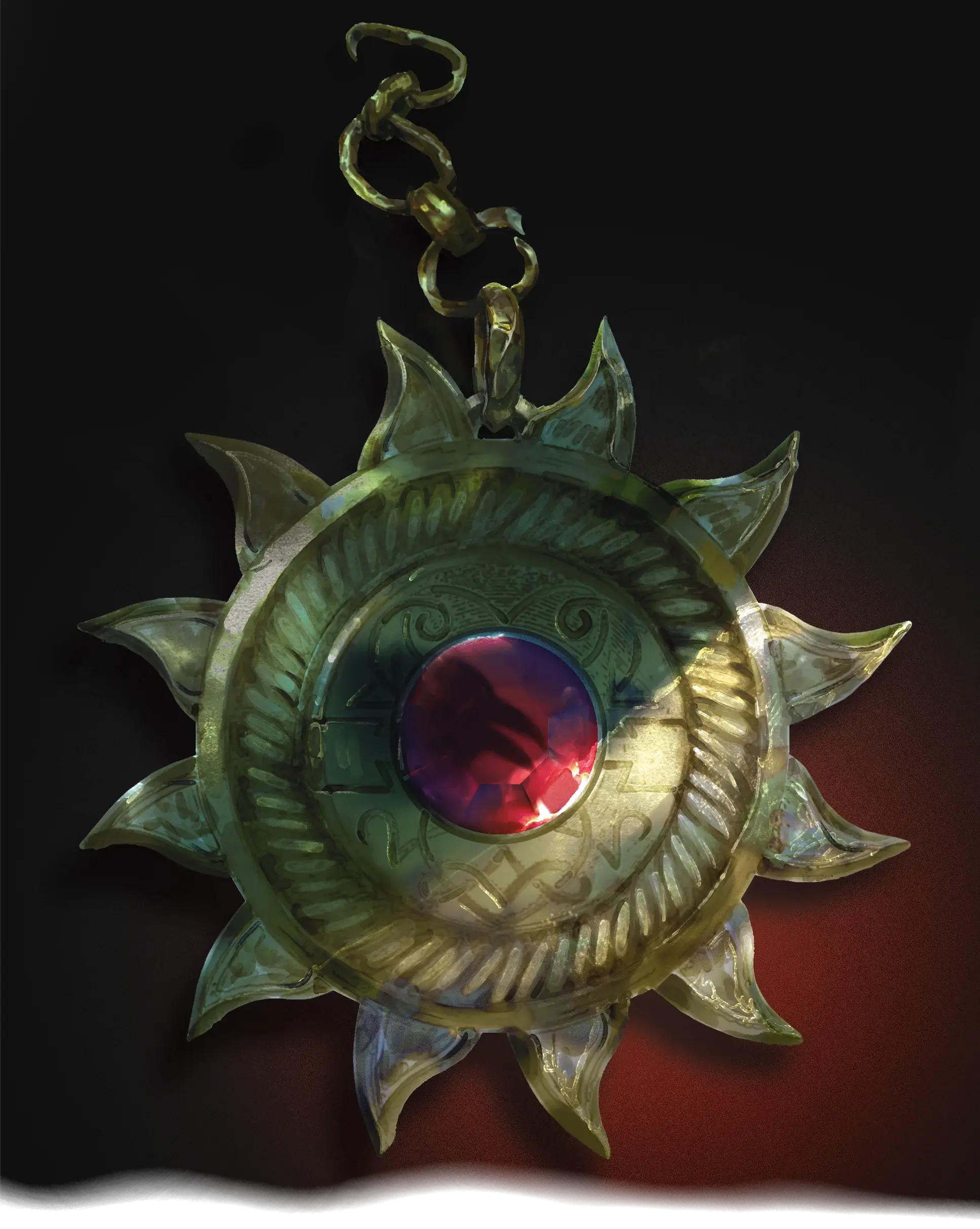
It™s fine if characters defeat a Darklord in combat before you intend. A Darklord loses control only after extraordinary events during an adventure™s climax. Until then, any defeat is an inconvenience or was part of a Darklord™s plans”in any case, it™s an opportunity for adventures. Don™t rob characters of the accomplishment of a victory, but don™t let them think they™ve won for long. Use the suggestions below to reinforce a Darklord™s threat even after an unexpected defeat.
Familiar Death. This isn™t Darklord™s first death. As they die, a Darklord might be amused, blasГ©, cocky, or fascinated, but not angry or fearful. As it departs, a Darklord might congratulate the characters or narrate their own end. Before dying, the Darklord should make it clear that the characters now have the Darklord™s full attention.
No Remains. Darklords don™t usually leave corpses. When a Darklord is defeated, the Mists claim their body, or the corpse dissolves in an unsettling or thematically appropriate effect.
Deadly in Defeat. With the Darklord™s defeat, what contingencies take effect? Perhaps the Darklord left a letter or a gift to be delivered on the event of their death. Maybe their servants have orders about what to do on the event of the Darklord™s disappearance”like commencing an attack or making a sacrifice. Perhaps threats the Darklord was restraining”such as hidden monsters or volatile servants”run wild, making the domain™s inhabitants desire the Darklord™s return. In any case, use a Darklord™s defeat to demonstrate that the villain is just the face of a much larger, evil system.
The Cat™s Away. Use a Darklord™s defeat to allow characters to have an adventure they couldn™t have had otherwise. Perhaps new allies feel emboldened to share information or the guardians of the Darklord™s lair are distracted. Use the Darklord™s absence as a chance to reveal more about the villain and provide the characters with the tools they need to defeat the Darklord once and for all.
The Darklord™s Shadows. The Darklord might be temporarily gone, but their evil isn™t. During the Darklord™s absence, consider ways the domain might focus more on the characters. Perhaps everyone in the domain whispers about them, wolves are curious about them, zombies flee from them, or the Mists seem to follow them. Cultivate the idea that the Darklord is still watching them or that the characters have violated a taboo.
The Darklord™s Return. Determine how the Darklord returns and what they do once they™re back. Does the Darklord seek revenge against the party? Is the Darklord more curious about”or obsessed with”the characters (see њDarklord Patronsќ below)? Does the Darklord invite the characters to their home, devise a trap for them, or seek to involve them in some broader plot? Or was the Darklord™s defeat truly inconsequential, with the characters learning of the villain™s return only well afterward?
Darklord Patrons
Most Darklords have lost track of how long they™ve been prisoners of their domains. Countless times they™ve failed to achieve their goals, and countless times the Dark Powers have tempted them with hope and opportunity again. Darklords seek new factors that might finally allow them to achieve their desires. And few factors hold more potential to further Darklords™ plots”or simply distract them for a time”than the characters.
Darklords might become fascinated by characters, viewing them as potential allies, protГ©gГ©s, tools, or challenges to overcome. In such cases, the Darklord might patronize or test the characters, sending them on quests throughout the Darklord™s domain or into the domains of rival Darklords. In return for the characters™ aid, the Darklord might offer the characters escape, secrets, or treasures, or the villain might promise not to harm innocents or the characters™ allies.
Darklords might serve as typical quest givers, but they tend to be more possessive of their allies. At your discretion, a Darklord™s magic might grant all the characters a Dark Gift from those presented in chapter 1. Alternatively, the Darklord might grant characters a sinister supernatural gift.
Darklord Gifts
Darklords might bestow a supernatural gift on characters they™ve allied with (see њSupernatural Giftsќ in the Dungeon Master™s Guide for details). These sinister Blessings might be a symbol of a promise made between the Darklord and the recipient, or they might be a reward for the characters™ service. A character must accept a Darklord™s Blessing to receive it. The Blessing can be removed by the Remove Curse spell, or the Darklord might revoke it anytime.
The following Blessings are examples of those a Darklord might bestow upon a character. Customize them to create gifts appropriate to specific Darklords.
Mark of Beasts
Mark of the Dread Lord
Mark of Obsession
Сразу после получения урона от существа, которое вы видите в пределах 10 футов от себя, вы можете Реакцией заставить существо совершить Испытание: Мудрость СЛ 14. При провале существо получает состояние до конца вашего следующего хода. Использовав это Благословение, вы не можете использовать его снова, пока не завершите Долгий отдых.
 Испытание: Мудрость СЛ 14
Пока у вас есть это Благословение, Тёмный властелин, давший его вам, может связаться с вами раз в 24 часа. Это может быть магическое сообщение, например заклинание Отправление, или короткое письмо, доставленное таинственным способом.
Mark of Sacrifice
Escaping Ravenloft
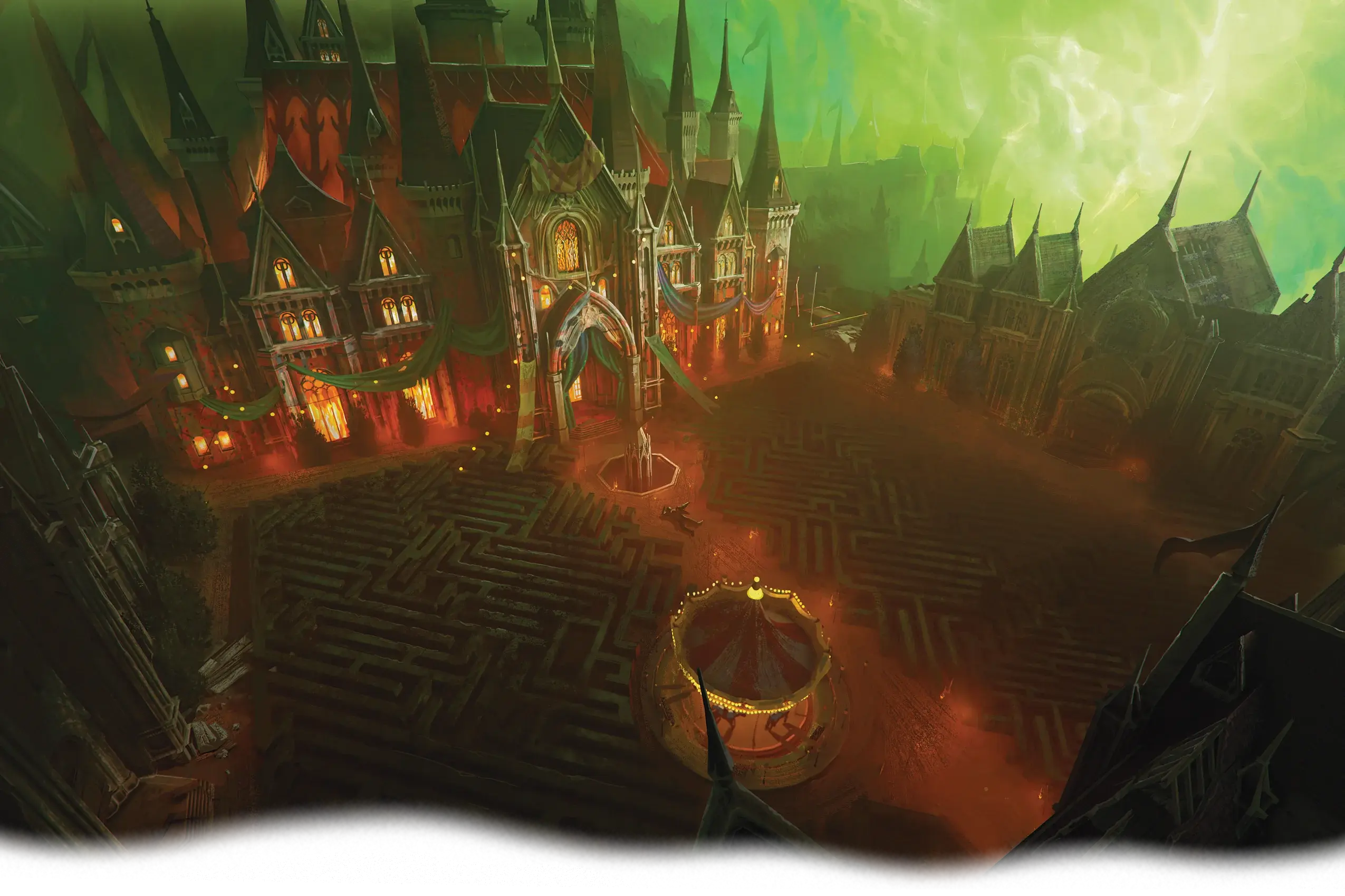
The Domains of Dread are as escapable as you please. The Mists might claim characters for a single adventure, then return them home. The characters might be residents of the Lands of the Mists, making escape meaningless. Or escape from Ravenloft might motivate an entire campaign. If you make escape a focus of your campaign, consider the following questions:
Possibility. Is it possible to escape the Domains of Dread against the will of the Dark Powers?
Experts. Who might have knowledge regarding the nature of Ravenloft? What might the characters do to convince them to share their knowledge?
Methods. What methods might allow the characters to escape? Is powerful magic enough, or does the nature of Ravenloft need to be altered? What costs might such methods have?
Ramifications. Will the characters™ escape only affect them, or will it have ramifications across the Domains of Dread (or the entire multiverse)?
Will. Do the Dark Powers have a role in the characters™ escape? Must characters win these mysterious entities™ favor or find ways to defy them?
Roll on or choose a result from Escape Adventure Seeds table to inspire adventure or campaign plots involving escape from the Domains of Dread.
Enemies and Allies
This section presents individuals and groups who might appear anywhere in the Lands of the Mists. Such individuals and organizations might create continuity between domains, facilitate travel through the Mists, or provide support to characters. Alternatively, they might serve as opponents capable of confounding characters in multiple domains.
Mist Wanderers
Individuals who travel the Mists might ally with characters or share mysteries that lead to adventures elsewhere in the Domains of Dread.
Alanik Ray
Alanik Ray is a peerless, elf investigator renowned in multiple domains as a master sleuth and solver of confounding mysteries. Alanik resides in Port-a-Lucine in Dementlieu with his husband, Arthur Sedgwick, but he investigates mysteries and aids sleuths across the Domains of Dread.
Arthur Sedgwick
Together with his husband, Alanik Ray, the physician Arthur Sedgwick investigates criminal cases and paranormal mysteries. The practical half of the detective duo, Arthur chronicles their adventures, having published two volumes: The Life of Alanik Ray and The Casebook of Alanik Ray.
Ez d™Avenir
As a former pupil of Dr. Rudolph van Richten, Ez d™Avenir (detailed in chapter 5) is no stranger to the dangers haunting the Mists. Since venturing out on her own, Ez has gained a reputation as a skilled monster hunter and foe of evil. She often allies herself with other adventurers to put an end to evils.
Firan Zal™honan
The arrogant scholar Firan Zal™honan seeks the secrets underpinning the Domains of Dread. He plots to use his discoveries to escape the Mists into the њtrue realitiesќ beyond. Firan hires agents to aid in his expeditions or to ferry him through the Mists”which he claims want to disrupt his efforts. Secretly Firan has ties to Azalin Rex, the missing Darklord of Darkon, or might be the Darklord in disguise (see chapter 2 for details).
Larissa Snowmane
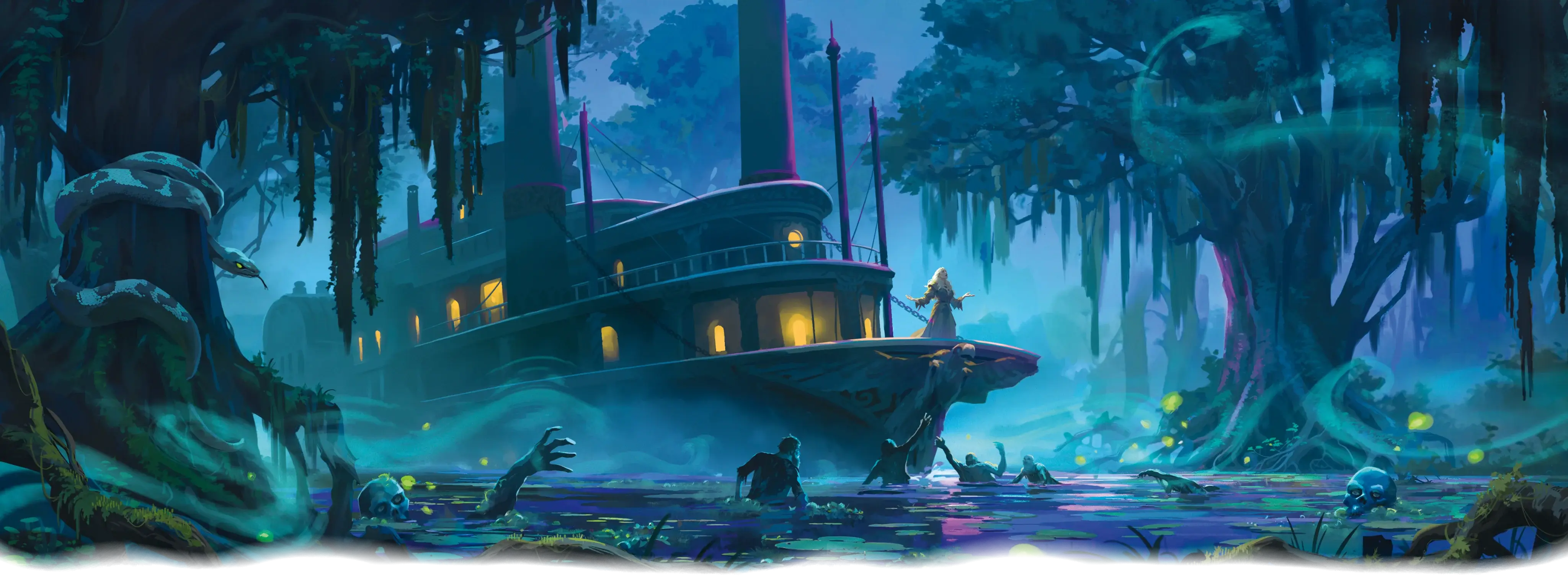
Larissa Snowmane ferries travelers between the Domains of Dread aboard her riverboat, River Dancer. Larissa protects those traveling with her. In the most dire circumstance, she uses her mysterious magic, the Dance of the Dead, which can control the dead at the risk of slaying the living. Larissa learned her magic in part from Anton Misroi, Darklord of Souragne. She avoids that swampy domain at all costs.
Savra Sunstar
Savra Sunstar is a monster hunter and the dhampir daughter of Jander Sunstar, a vampire hero who saved Savra™s mother from an early demise. For her part, Savra despises her father and seeks to slay him. She has devoted her life to hunting vampires and allies herself with like-minded adventurers.
Weathermay-Foxgrove Twins
The twins Gennifer and Laurie WeathermayFoxgrove (detailed in chapter 5) are tenacious adventurers who follow their family™s tradition of slaying monsters and defending the innocent. They reside in Mordent and have learned much from their surrogate uncle, Rudolph van Richten.
Organizations
These organizations span multiple domains.
Church of Ezra
Goal: Seek mercy from an ambivalent god
Adventure Themes: Apathetic congregations, superstitions, witch hunting
Pious souls in multiple domains pray to Ezra, an aloof god who personifies the Mists. Ezra™s worshippers appear in congregations with varied (and sometimes conflicting) practices. The church serves largely as a formalization of local superstitions, whether in modest rural temples or urban cathedrals. When common folk give voice to their hopes or seek to ward off evil, they often pray to Ezra.
The Circle
Goal: Vanquish evil through acts of self-sacrifice
Adventure Themes: Bravery, hubris, proof of heroism, quests against evil, tragedy
Bold knights of the Circle quest from the Shadowlands in search of evil. More often than not, though, they find tragic fates. Even successful knights often venture back to the Shadowlands with evidence of their victories, potentially carrying evil back to their homeland. The knights of the Circle provide bold but reckless assistance to other would-be heroes, endlessly seeking to prove their valor.
Keepers of the Feather
Goal: Discover the paranormal and dispel evil
Adventure Themes: Paranormal investigations, occult mysteries, mysticism
The founding members of the Keepers of the Feather are wereravens (see chapter 5) in Barovia who oppose Strahd and whose reach extends to other domains. These Keepers are cautious, hiding their nature and guiding others so as not to jeopardize themselves or the mystical secrets they™ve gathered over generations. Many aided by these wereravens aren™t ever aware of their assistance.
In other realms, mysteries and talismans of the Keepers of the Feather have fallen into the hands of socialites and spiritualists. In social clubs, curious occultists pursue the mysteries of sГ©ances, fortune telling, metaphysical theories, and tales of the macabre. Such dabbling is as likely to cause catastrophes as it is to help those in need. These Keepers identify themselves with amulets that mimic the shape of a Barovian relic known as the Holy Symbol of Ravenkind.
Both factions maintain a network of trained ravens that send messages between group members in different domains.
Order of the Guardians
Goal: Destroy or contain cursed items and phenomena
Adventure Themes: Ending curses, exorcisms, supernatural investigations, vault defense
A network of monastic occultists, the Order of the Guardians hunts and destroys dangerous supernatural objects, cursed items, and stranger anomalies. If the Guardians can™t destroy dangerous relics, they contain them within hidden, heavily warded vault-monasteries. The Guardians might share goals with characters trying to prevent supernatural dangers, but they might also consider characters who employ dangerous magic to be threats.
Priests of Osybus
Goal: Release Strahd von Zarovich
Adventure Themes: Cult rituals, necromancy, secrets of the Domains of Dread
The Priests of Osybus follow the teachings of a depraved lich and steal souls to transcend death. With their foul immortality, they seek to free Strahd von Zarovich from the Mists, an act they believe will cause the dissolution of the Domains of Dread. This inspires the priests to learn all they can about the deepest mysteries of the Mists. In shadowy cults, they conduct rituals aimed at escaping the Mists. These priests are detailed further in chapter 5.
Ulmist Inquisition
Goal: Destroy the evil that dwells in wicked hearts
Adventure Themes: Ends justifying the means, hunting evil, psionic interrogation
The three branches of the Ulmist Inquisition employ psionic powers to stamp out evil, but their zeal and willingness to peer into others™ minds cause people to fear the inquisitors as much as the villains they oppose. Cells of the Ulmist Inquisition often ally with the Church of Ezra and oppose the priests of Osybus. Ulmist inquisitors might side with adventurers against evil, but they often test the virtue of their allies™ souls. These inquisitors are detailed further in chapter 5.
Vistani
Goal: Find a way home, preserve age-old traditions, predict and avoid dangers in the Mists
Adventure Themes: Reliable guides, stories from various lands, travel between domains
Known throughout the Land of the Mists, Vistani (singular: Vistana) have a unique understanding of the Domains of Dread and the hidden paths between them. Following itinerant traditions, many Vistani and their adopted family members travel between domains, learning of distant lands, the many faces of evil, and strange wonders. Vistani never linger in one domain for long, as they endlessly seek a path to their legendary homeland.
Horror Atmosphere
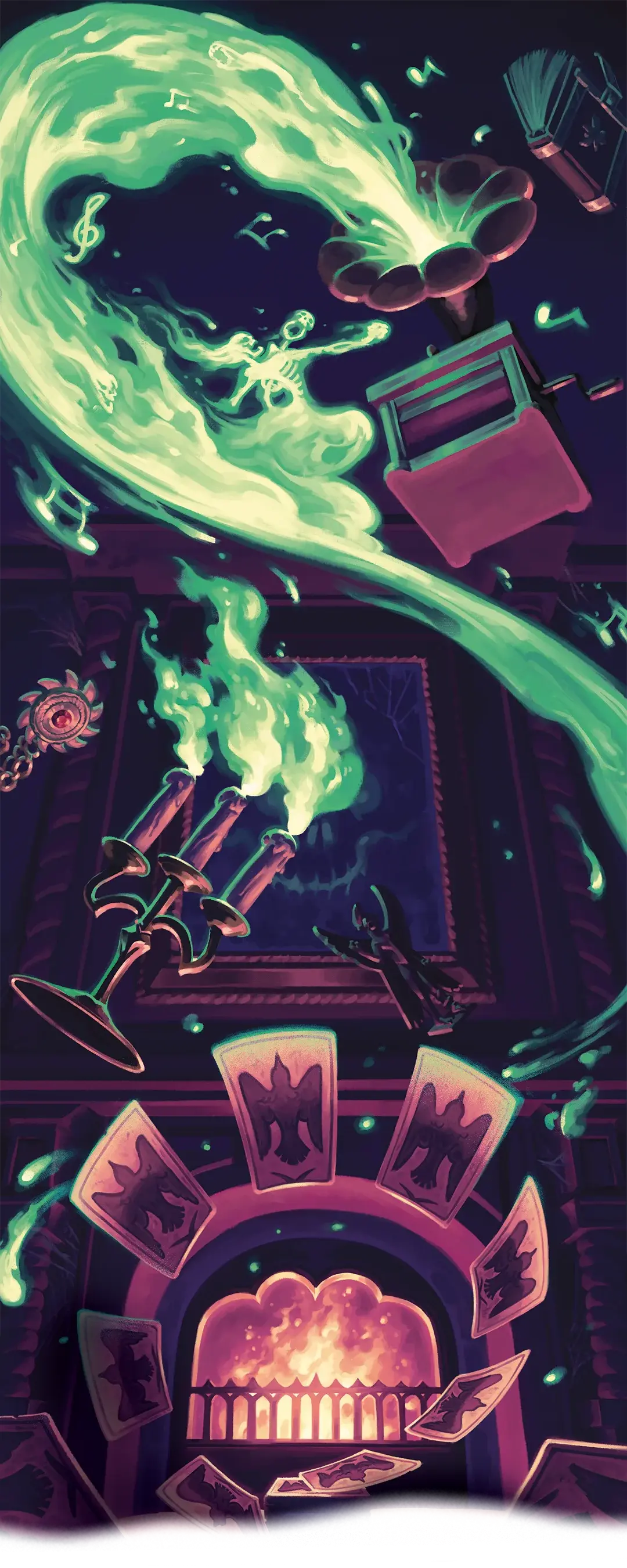
Frightful D&D adventures benefit from a game atmosphere that reinforces the horrifying plot. Consider these elements to influence your game™s atmosphere, customizing what you can and not fretting about what you can™t:
Location. Strive to play in an area with minimal distractions that all players are comfortable in. Reduce distracting stimuli by turning off unnecessary screens and removing nongame materials.
Lighting. Dimming the lights can cause distractions to fade and create an eerie ambiance in your game space. You can also adjust the lighting to reflect a setting™s light level, if it™s easy for you to do so. However, always ensure the players have enough light to read by.
Music. You can use music to reinforce an adventure™s mood. Create playlists in advance, choosing options without lyrics and that aren™t recognizably tied to popular media. If you can subtly control volume, slowly raise it when you want attention and lower it when players are talking. Experiment with how volume and tempo influence the mood of a scene.
Props. Props and handouts are useful but shouldn™t become chores or distractions. They might be as simple as a whiteboard for notes or a handwritten letter from a Darklord. Ravenloft has a history of featuring props in its adventures, such as the tarokka deck (see appendix A).
Horror Roleplaying
Consider the following methods to develop a sense of dread during your horror adventurers.
Describing Horror
Rather than just naming a threat, inspire your players’ imaginations by describing the horror indirectly using the following techniques:
Before It Arrives. Foreshadow the horror’s approach. How do the environment, nearby animals, the weather, or shadows react to it?
Approaches. What sounds does the horror make as it moves? What parts do characters see before the whole comes into view?
Up Close. What does the horror smell like? How does it breathe? Does the air around it grow cold?
Attacks. How does the horror attack? What does damage from it feel like? When it grabs a character, what does it feel like? Does it have physical weapons, or is it a supernatural force that warps other life?
Wounded. When the horror is wounded, how does it react? What does its blood look like? What is inside it?
Horror Pacing
Not everything can be scary, and continuous terror is unsustainable. Before players grow numb to endless tension, create opportunities for them to catch their breath and regain a feeling of calm. The best horror adventures are like roller coasters, ratcheting up suspense and releasing it before building toward the next harrowing moment.
Idle Uneasiness
Occasionally slow your adventure’s pace to draw out tension. Linger on describing details. Ask players to describe what their characters are thinking or feeling, or ask what the players think is the worst possible thing that could happen right now. Describe feelings of being watched. Let characters respond to these stray thoughts. Sometimes these impressions should just be their nervousness getting to them. But sometimes it’s the calm before a threat strikes.
Let Players Fill Gaps
Invite players to turn their imaginations against themselves. Ask players to fill in details with questions like these: What does the way it moves remind you of? It emits the worst smell—what is it? Something on the shelf reminds you of a nightmare—what is it? Players’ responses don’t need to control the narrative; it’s up to you whether these responses are true or just the characters’ perceptions.
Mood Modeling
Model the behaviors you want players to emulate by focusing on the game, letting others speak in turn, heading off encroachment on boundaries, and complimenting exciting choices. Stand or pace during intense moments. Speak faster or anxiously when something scary is happening. Raise your voice during pitched battles, and whisper during tense or conspiratorial moments. Allow yourself to sound uncertain, correct yourself, or pause as if you heard something outside. Ask players, “Are you sure?” By engaging with the suspenseful atmosphere you want to create, you bring it into being at the table.
Out of Time
When the time for action comes, make your narration urgent. Speak quickly and in short bursts. Focus less on senses and more on descriptions—a splash of crimson, who knows where it came from? Politely demand players react quickly: “There’s no time to debate—what do you do?”
Reliability and Trust
Reliability and trust are just as important to your horror adventures as lurid shocks. Frequent betrayals can make players hesitant, so emphasize that certain people and locations are trustworthy through repeated positive encounters.
End on Cliffhangers
Leave players excited to play again. When ending a session, implement one of the following to conclude on a cliffhanger: Hint at a new threat, impose a complication on existing plans, increase the stakes, introduce a new mystery, have a foe appear, have the world change, or otherwise shock the characters. Then call for a break before players can react.
Haunted Bastions
The rules for Bastions in the Dungeon Master™s Guide allow characters to establish sanctuaries to rest and accrue resources between adventures, but these redoubts aren™t outside the grasp of the Mists.
Bastions in the Mists
Bastions in the Domains of Dread work well in campaigns that focus on a single domain or where Darklords aren™t likely to seal their domains™ borders and cut characters off from their Bastions.
Characters can create Bastions in any domain. The domains of Borca, Darkon, Lamordia, Mordent, and the Shadowlands are well suited to hosting Bastions due to their large size or aloof Darklords. Consider having characters inherit one or more existing structures”such as a ruined fortress, secluded tower, or house recently scoured of ghosts. Should characters adopt such a structure, they can refurbish it to their specifications.
How Darklords respond to Bastions is up to you, but don™t create plots that are hostile to Bastions. Darklords might ignore a Bastion, be curious about it, or use it as one more way to bind characters within their domains.
Haunted Bastions
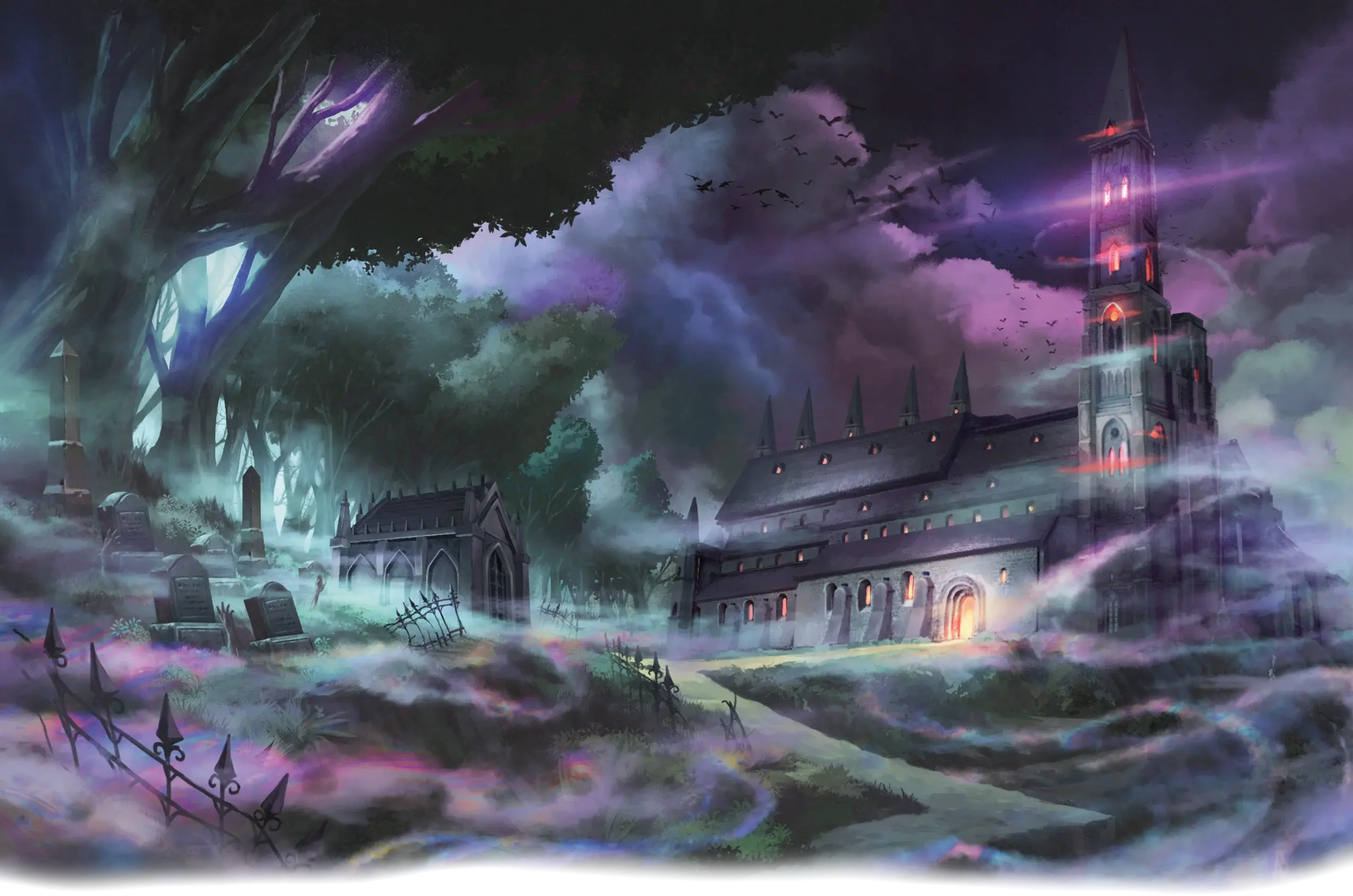
Haunted Bastions are afflicted by unusual supernatural events. These might be unpredictable annoyances at first, but clever characters might turn hauntings to their advantage.
If you use this system, the first special facility characters create in their Bastion is Haunted. A Haunted special facility has the following rules:
Irreplaceable. A Haunted special facility can™t be replaced until it is no longer Haunted.
Repeating. While there is at least one Haunted special facility in a Bastion, whenever a character gains a new special facility or replaces a special facility with a different one, roll any die; on an even result, that new facility is Haunted.
When a character issues an order to a Haunted special facility or a Maintain order to their whole Bastion, roll 1d6; on a 1, roll on the Bastion Hauntings table and refer to the њHaunting Descriptionsќ section to see what happens. A Bastion can experience only one haunting per Bastion turn.
Haunting Descriptions
The hauntings from the Bastion Hauntings table are detailed here in alphabetical order.
Cursed Hireling. One of your Bastion™s hirelings is cursed. As long as the hireling remains cursed, it won™t leave the special facility it manages, and any work conducted in that facility takes twice as long to complete.
Free-Roaming Spirit. A random special facility in your Bastion becomes Haunted. If all the special facilities in the Bastion are already Haunted, the DM rolls again on the Bastion Hauntings table.
Friendly Ghost. A benevolent spirit possesses a hireling of the DM™s choice. If the special facility where the hireling works produces items or Gold Pieces, it produces twice as much as usual as long as the hireling remains possessed. The spirit departs after 14 days.
Hidden Room. The spirits reveal a hidden closet within your Bastion. Add a 5-foot-square space to your Bastion. Something might lie inside, at the DM™s discretion.
Lightning Storm. Trade orders issued this turn have no effect (including one that triggered this haunting, if applicable). If you have a Lightning Generator special facility, this Bastion Haunting has no effect.
Living Dead. A group of mindless undead shamble from the Mists. The Attack Bastion event occurs, but roll 3d6 for that event rather than 6d6.
Mist Wanderers. The Mists rise and 1d4 strangers emerge, seeking shelter. If there is room in your Bastion, they join as hirelings. Otherwise, they linger for 1d4 days before vanishing into the Mists.
Mysterious Priest. A hooded priest appears at the Bastion, attracted by its haunting. Roll any die. One of the following occurs based on whether you rolled an even or an odd number on the die:
Inquisitor (Even). The priest is a witch hunter. If you have an Ancient Altar, Arcane Study, Cabinet of Curiosities, or SГ©ance Parlor in your Bastion, the priest destroys it and you must replace it with a different special facility. If your Bastion has none of these facilities, the Extraordinary Opportunity Bastion event occurs.
Exorcist (Odd). The priest is an exorcist. If you have a Reliquary, Sacristy, Sanctuary, or Sanctum in your Bastion, the priest offers to remove a haunting from one facility. If you agree, choose one Haunted facility; that facility is no longer Haunted.
Ill Luck. Accidents and bad luck plague your Bastion. Harvest orders issued this turn have no effect (including one that triggered this haunting, if applicable).
Poltergeist. Disruptive happenings plague the Bastion. Empower and Research orders issued this turn have no effect (including one that triggered this haunting, if applicable).
Spatial Warp. The nature of a Bastion special facility changes. Roll 1d4. On a 4, replace one of your Bastion™s special facilities with another for which you qualify; otherwise, increase the size of a Cramped special facility in your Bastion to Roomy or a Roomy one to Vast, at no cost.
Spectral Vision. A ghostly vision of a past event plays out. You gain some insight into the spirits that haunt your Bastion or the history of the surrounding land, as though affected by the Legend Lore spell.
Vistani Visitors. Vistani travelers visit your Bastion, drawn by tales of the spirits that inhabit it. In return for a night™s shelter, they offer to reveal your fate via a casting of the Augury spell or through a tarokka reading (see appendix A). If you turn them away, they depart, but the highest-level special facility in your Bastion that isn™t already Haunted becomes Haunted.
Special Facilities
Characters can create the following special facilities in addition to those in the Dungeon Master™s Guide. These facilities are summarized on the Special Facilities table.
Ancient Altar
Prerequisite: None
Space: Cramped
Hirelings: 1
Order: Empower
An Ancient Altar is a solemn chamber where you can make offerings to mysterious forces.
Empower: Purge Haunted Facility. You commission your hireling to lead a ritual that takes 7 days, during which time you must remain in the Bastion. At the end of the ritual, you must offer a worthy sacrifice, which can be monetary (1,000 GP) or blood (the fresh corpse of at least one Large creature or four Medium creatures that aren™t Constructs or Undead). If you make a blood sacrifice, roll on the Bastion Hauntings table. Once the ritual is complete, the sacrifice is destroyed. Choose a Haunted special facility in this Bastion or in a Bastion connected to this one; that facility is no longer Haunted.
Blasphemous Charm. After spending a Long Rest in your Ancient Altar, you gain a magical Charm that lasts for 7 days or until you use it. You can use the Charm as a Magic action to cast Hunger of Hadar without requiring Material components. You can™t gain this Charm again while you have it.
Cabinet of Curiosities
Prerequisite: None
Space: Cramped
Hirelings: 1
Order: Trade
A Cabinet of Curiosities is a small salon, closet space, or antechamber where you can keep and catalog peculiar objects and fascinating oddities.
Trade: Acquire Curios. When you issue the Trade order to this facility, you supply this facility™s hireling with a certain amount of gold and commission them to purchase strange items from unusual sources. It takes 28 days for the hireling to return to the Bastion with one or more magic items for you. Your investment determines the rarity of these items, and the quantity of magic items depends on the number of Haunted special facilities in your Bastion at the time of the hireling™s return, as shown on the Curio Investment and Curios Collected tables.
Level | Special Facility | Prerequisite | Order |
|---|---|---|---|
5 | Rookery | None | Craft |
5 | SГ©ance Parlor | None | Research |
9 | Ancient Altar | None | Empower |
9 | Cabinet of Curiosities | None | Trade |
9 | Infirmary | Proficiency in the Medicine skill | Craft |
13 | Lightning Generator | None | Empower |
13 | Spirit Vault | None | Research |
17 | Liminal Space | None | Recruit |
Investment | Item Rarity |
|---|---|
150 GP | Common |
600 GP | Uncommon |
6,000 GP | Rare |
60,000 GP | Very Rare |
Haunted Facilities | Magic Items | Cursed Item Chance (1d100) |
|---|---|---|
0 | 1 | ” |
1“2 | 1“2 (flip a coin) | 01“10 |
3“5 | 1d3 | 01“20 |
6 | 1d4 | 01“25 |
To determine how many magic items your hireling brings back, count the Haunted special facilities in your Bastion, then roll the die indicated in the Magic Items Acquired column on the Curios Collected table. The DM rolls on the Cursed Item Chance (1d100) column to determine whether one of the magic items carries a curse. The DM chooses which item is cursed and establishes the nature of the curse.
For each magic item acquired, roll on a table in the њRandom Magic Itemsќ section in the Dungeon Master™s Guide of the corresponding rarity to determine what the item is. (Select the treasure theme randomly.)
Infirmary
Prerequisite: Proficiency in the Medicine skill
Space: Roomy
Hirelings: 2
Order: Craft
An Infirmary provides emergency healing and continual care to injured or sick Bastion occupants.
Craft Options. When you issue the Craft order to this facility, choose one of the following options:
Craft: Antitoxin. You commission the facility™s hirelings to craft two vials of Antitoxin. The work takes 7 days and costs no money. You can spend 50 GP during the creation process to enhance one of the vials of Antitoxin, or 100 GP to enhance both. An enhanced Antitoxin ends the Poisoned condition on the creature that drinks it. An enhanced Antitoxin loses this enhancement after 28 days.
Craft: Enhanced Potion of Healing. You commission this facility™s hirelings to increase the potency of up to two Potions of Healing. You must provide the potions to be enhanced, and the process takes 14 days to complete. A Potion of Healing becomes a Potion of Healing (greater). When you reach level 13 you can provide up to two Potions of Healing (greater), each of which becomes a Potion of Healing (superior).
Triage. When your Bastion is attacked and you roll a number of dice to determine how many Bastion Defenders are lost, you can reroll a number of those dice equal to the number of hirelings this facility has. You must use the new roll.
Enlarging the Facility. You can enlarge your Infirmary to a Vast facility by spending 2,000 GP. If you do so, the Infirmary gains two hirelings, and the number of Antitoxins or Potions of Healing you can enhance at a time increases to four.
Lightning Generator
Prerequisite: None
Space: Roomy
Hirelings: 1
Order: Empower
A Lightning Generator can transform atmospheric electricity to serve a variety of useful functions.
Charm of Electromancy. After spending a Long Rest in your Lightning Generator, you take 8d6 Lightning damage and you gain a magical Charm that lasts for 7 days (see the Dungeon Master™s Guide for rules on Charms). The Charm has 3 charges. You can expend 1 charge from the Charm to cast the Telekinesis spell. Once all its charges are expended, the Charm vanishes from you.
Revivification. When you cast the spell Raise Dead and Resurrection while in this facility, the cost of that spell™s Material components are reduced by 1,000 GP (minimum of 0).
Empower: Lightning Life. The facility™s hireling channels the Generator™s energy to cast Animate Objects, targeting one Large or Huge object of your choice in the Bastion. The spell™s duration is 7 days and doesn™t require Concentration.
Liminal Space
Prerequisite: None
Space: Vast
Hirelings: 1
Order: Recruit
Your Bastion becomes connected to an unfathomable demiplane filled with vast, empty spaces and strange beings. This special facility doesn™t take up space in your Bastion; instead, the entrance to this facility appears in the closets, crawlspaces, and shadows of your Bastion™s other basic and special facilities. The hireling in charge of this facility protects the Bastion™s inhabitants from stray entities that slip out from the demiplane. This facility always counts as Haunted.
Dark Bargains. You can enter this facility and wander within for 7 days, consulting and bargaining with the strange entities there. If you leave the Bastion during this time, you gain no benefit. At the end of the seventh day, you gain a Dark Gift feat of your choice (see chapter 1). You can only have one feat from this benefit at a time; if you use this benefit when you already have a feat from it, the feat you gain at the end of the seven days replaces any feat previously gained from use of this facility.
Recruit: Stranger. When you issue the Recruit order to this facility, you instruct the facility™s hireling to conduct a ritual and petition an entity from the demiplane for aid. This ritual takes 7 days and costs 1,000 GP. At the ritual™s end, roll any die. On an odd number, the summoned entity refuses your request and kills the hireling, and this facility can™t be used until your next Bastion turn, at which point the hireling is replaced at no cost to you; on an even number, the summoned entity agrees to your request and takes up residence in your Liminal Space.
While residing in your Liminal Space, an entity counts as a Bastion Defender, and if your Bastion is attacked, each entity in your Liminal Space reduces by 1 the number of dice you roll to determine how many Bastion Defenders are lost in the attack. You can choose not to count the entity as a Bastion Defender, in which case you can™t call on it to defend the Bastion; instead, the entity acts according to its nature, using the Unspeakable Horror stat block (see chapter 5). You can have up to three entities in your Liminal Space at a time. Deduct any you lose from your Bastion Defenders roster.
Rookery
Prerequisite: None
Space: Cramped
Hirelings: 1
Order: Craft
A number of ravens equal to your character level roost in a Rookery. Whenever a creature enters the facility, the birds uncannily track its movement, an unfathomable intelligence behind their beady eyes.
Craft: Mist Talisman. When you issue the Craft order to this facility, you can commission the hireling to send ravens to various contacts in a Domain of Dread you have either visited previously or heard about from a creature that has been within said domain. This work takes 21 days, during which time no other activity can occur within this facility.
At the end of this period, the hireling produces a Mist talisman (see the introduction) linked to the chosen Domain of Dread.
Messenger Ravens. Whenever you finish a Long Rest in your Bastion, you can send one raven bearing a written message of 25 words or fewer to a creature you have met or a creature described to you by someone who has met it. After receiving this message, the recipient can reply in a like manner, attaching their response to the raven. Regardless of whether or not the recipient responds, the raven returns to the rookery after 7 days have passed.
You can send a message via raven in this way across any distance, though the message recipient must be on the same plane of existence as your Bastion or in a demiplane linked to yours by the Mists of Ravenloft. A messenger raven delivers the message regardless of any magical wards or other interposing forces, including the Mists and closed borders of a Domain of Dread. If the raven is unable to deliver your message, it returns to your rookery after 7 days with your original message still attached.
SГ©ance Parlor
Prerequisite: None
Space: Cramped
Hirelings: 1
Order: Research
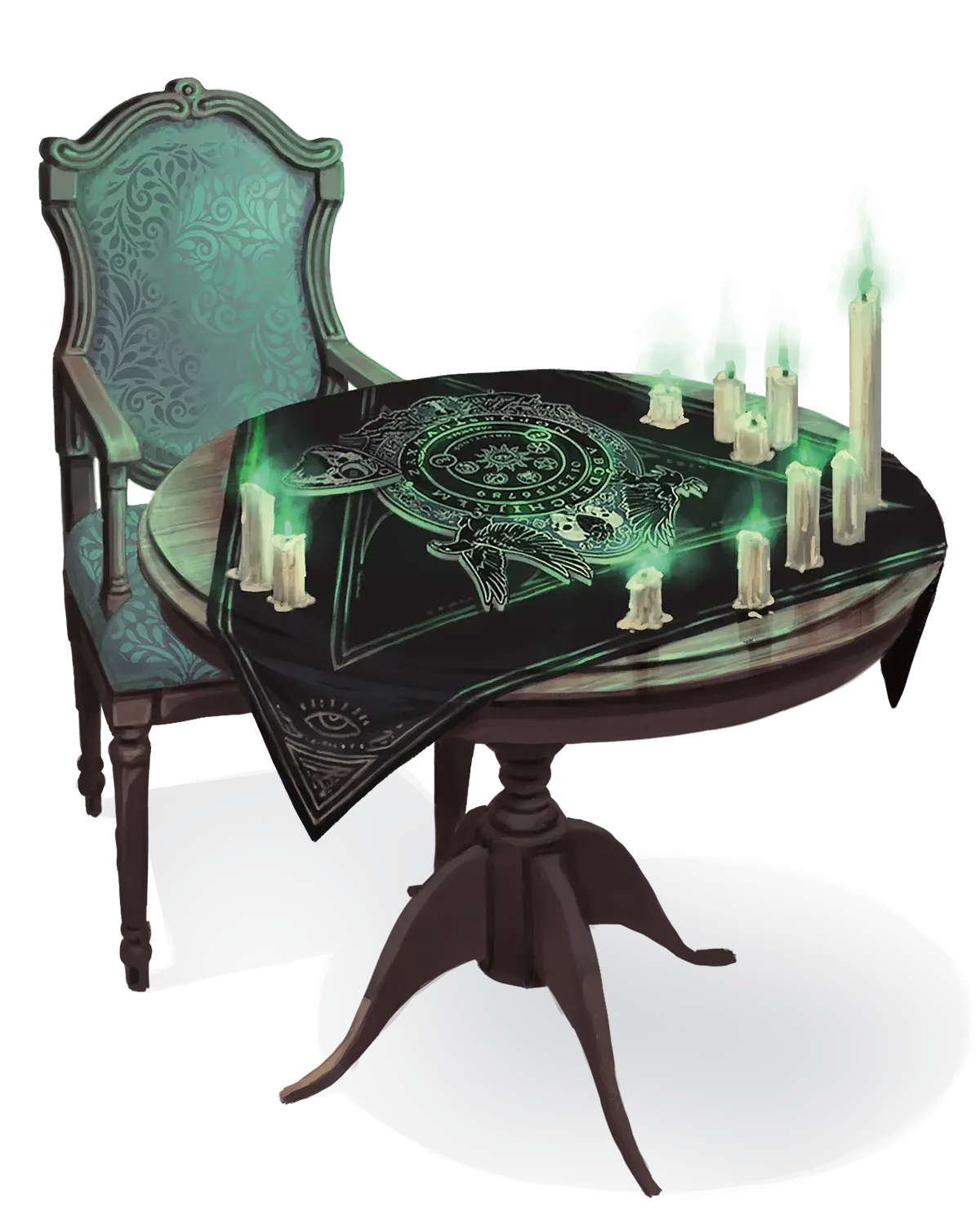
The veil between the world of the living and the dead grows thin in a SГ©ance Parlor.
Research: Fortune Telling. When you issue the Research order to this facility, you commission its hireling to read your fortune by casting bones, interpreting tea leaves, performing a tarokka reading, or using some other means. After your fortune is read, you gain Heroic Inspiration. You can™t gain this benefit again until you finish a Long Rest.
Speak with Dead. After spending a Long Rest in your SГ©ance Parlor, you can cast Speak with Dead immediately without expending a spell slot or needing Material components. When you cast it in this way, you can target any deceased creature whose name you know, as long as you have a piece of its remains (such as ashes or a bone) or an object that was important to the creature in life (such as a brooch or signature weapon). The target speaks through an implement in the SГ©ance Room such as a crystal ball or spirit board.
Spirit Vault
Prerequisite: None
Space: Roomy
Hirelings: 1
Order: Research
A Spirit Vault is magically warded to imprison and exorcise malevolent spirits and other supernatural forces. Haunted portraits, cursed relics, and other eerie curios line the shelves of this dark vault. This facility always counts as Haunted.
Esoteric Knowledge. After spending a Long Rest in your Spirit Vault, you gain one of the following magical Charms:
Charm of Exorcism. You can use the Charm as a Magic action to cast Dispel Evil or Good or Remove Curse without requiring Material components.
Charm of Malediction. You can use the Charm as a Magic action to cast Hex (level 3 version) or Bestow Curse without requiring Material components.
The Charm lasts for 7 days or until you use it. Intelligence, Wisdom, or Charisma is your spellcasting ability for the Charm™s spells (choose each time you gain this Charm).
Research: Ask the Occult. When you issue the Research order to this facility, you or its hireling study the various relics and question the imprisoned entities within your Spirit Vault. This work takes 7 days. At the end of this time, roll 1d6. On a 1, the work is psychically taxing; if you did the research, you take 6d6 Psychic damage, and if the hireling did the research, they immediately die, and this facility can™t be used again until your next Bastion turn. Otherwise, you or the hireling gain information as if you had successfully cast the Contact Other Plane spell. The hireling shares any information they learned with you the next time you speak.